
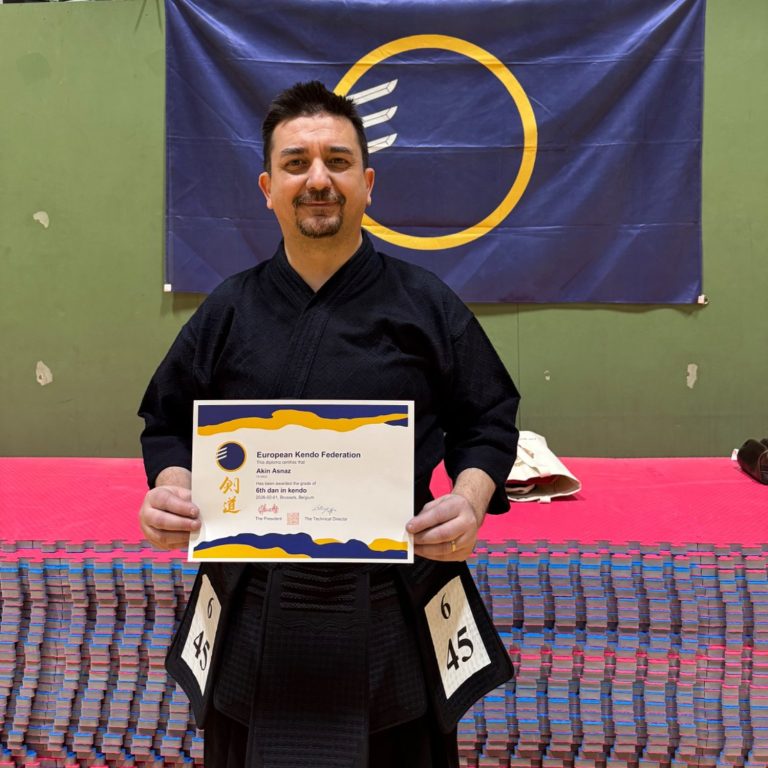
AKIN ASNAZ
Level 2 Coach
Kendo 6.Dan / Iaido 2.Dan
He began his Kendo journey in 2003 and was a member of the first Turkish National Kendo Team. With continuous dedication to Kendo and Iaido training (except during the COVID period), he founded the SoShinKai Kendo Club in Istanbul, Turkey, in 2012. Since 2018, he has been training in the UK, where he continues to contribute to and actively participate in the British Kendo community.
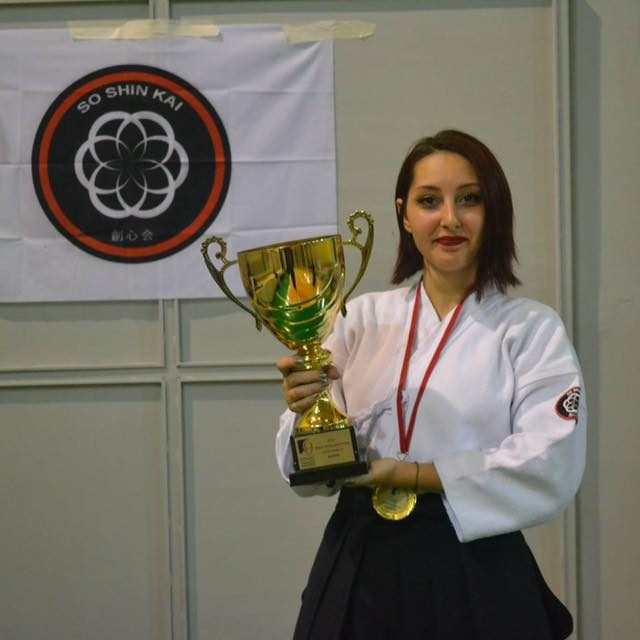
EZGI ASNAZ
Level 2 Coach
Kendo 4.Dan
She began practicing Kendo in 2011 and became a member of the Turkish National Kendo Team. She has achieved notable results in various Kendo tournaments both in Turkey and internationally. Since 2019, she has continued her Kendo training in the UK, where she remains actively involved in the British Kendo community.
What is Kendo ?
History
Kendo, as it is practiced today, was developed about two hundred years ago, when the "Shinai", a bamboo sword, was devised to enable the safe and free practice of the ancient military art of "Kenjutsu" or sword fighting. During the 16th century, when Japan was in the period of successive and nationwide civil wars, the techniques of sword manipulation were studied as a matter of life and death. Warriors were trained to brandish a sword as though it was an extended part of their body. Wooden swords were used more freely to study and practice the art of sword fighting. Eventually basic methods were selected for manipulating a sword to be called "Kata", which are the fundamental forms practiced today in Kendo.
Under the warring environments there were many expert swordsmen, claiming originality in one way or the other to establish schools of their own, totalling in number as many as 600 at its peak in history. Throughout this warring period, the sole objective was the defence of their land and the defeat of their opponents. In doing so, "Bushi" or warriors were trained in how to kill their enemies without the unnecessary prolonging of death. This then formed one of the central tenets of etiquette in sword fighting.
"Kata" forms have continued to be most important in Kendo to master. But mere combinations of "Kata" forms are not sufficient to cover the varied techniques required to meet all happenings in sword fighting. Therefore, free practice or sparring was encouraged and thereby facilitated the development of the "Shinai" or bamboo sword and protective armour for safety.
Today Kendo followers train themselves primarily by using bamboo swords and learn "Kata" forms by using real metal swords or wooden swords.
Practice
Kendo, as it is practiced today, was developed about two hundred years ago, when the "Shinai", a bamboo sword, was devised to enable the safe and free practice of the ancient military art of "Kenjutsu" or sword fighting. During the 16th century, when Japan was in the period of successive and nationwide civil wars, the techniques of sword manipulation were studied as a matter of life and death. Warriors were trained to brandish a sword as though it was an extended part of their body. Wooden swords were used more freely to study and practice the art of sword fighting. Eventually basic methods were selected for manipulating a sword to be called "Kata", which are the fundamental forms practiced today in Kendo.
Under the warring environments there were many expert swordsmen, claiming originality in one way or the other to establish schools of their own, totalling in number as many as 600 at its peak in history. Throughout this warring period, the sole objective was the defence of their land and the defeat of their opponents. In doing so, "Bushi" or warriors were trained in how to kill their enemies without the unnecessary prolonging of death. This then formed one of the central tenets of etiquette in sword fighting.
"Kata" forms have continued to be most important in Kendo to master. But mere combinations of "Kata" forms are not sufficient to cover the varied techniques required to meet all happenings in sword fighting. Therefore, free practice or sparring was encouraged and thereby facilitated the development of the "Shinai" or bamboo sword and protective armour for safety.
Today Kendo followers train themselves primarily by using bamboo swords and learn "Kata" forms by using real metal swords or wooden swords.
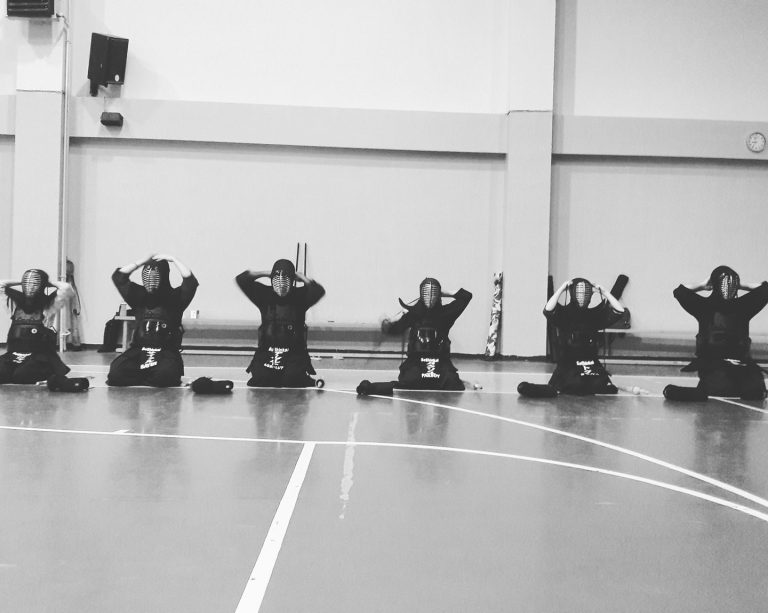
Dojo Etiquette
Although we train in a "regular" sports hall, it is our treatment of that space that makes it a dojo.
Dojo is the "place of the Way", where we train and uphold the principles of kendo, which is always present by way of our conduct inside of the do
Some (but definitely not all) dos and don'ts:
- Leave your shoes neatly outside and walk in barefoot
- Bow as you enter and leave the dojo
- We always sweep the floor before each practice. Typically, the junior students are expected to do it, as senior ones have more equipment to get ready with, but all kendoka are expected to take a turn at sweeping the floor every now and again (even the teachers).
- Do not lean against the walls during class.
- Treat the dojo, all who are in it, and club staff with respect.
- Be on time. As "life" tends to happen, it's not a transgression to be late sometimes. When that happens, get yourself ready quickly and quietly, and wait on the side (ideally in seiza) to be included in the practice by the leading instructor.
- Often it means you need to warm yourself up before joining in. Historically it could be taken as an offensive act to enter a dojo without permission, but nowadays it's much more practical, and related to health and safety.
- When instructed to join in, apologise for being late ("sumimasen!").
- If you have any injuries or need to leave the class early – make sure to let the leading instructor know before practice.
- Do your best not to walk in front of other kendoka, especially when they are in seiza and putting their armour on. If that cannot be avoided, while walking in front of them, bow and extend your right hand palm up.
- Kendo starts and ends with a bow, so bow before and after changing training partners.
- Unless you have given an important reason to the instructor, keep your phone on silent during the class.
- Most importantly – do not swing your shinai around, unless instructed to do so. These may be made from bamboo and fairly safe, but they do move at high speeds.